
A tear-off tarp is a reusable tarp that roofing contractors deploy during a roof replacement to catch falling shingles, nails, and debris, sliding them away from the house and into a truck bed, dumpster, or controlled pile on the ground. Used correctly, a shingle tear-off tarp can shave hours off cleanup and protect landscaping and the rest of the property from damage.
This is the roofer's guide to using a shingle tear-off tarp on a roof replacement, start to finish, from a manufacturer that has been building them in the USA since 1874.
What Is a Shingle Tear-Off Tarp?
A shingle tear-off tarp is a purpose-built tool, not a general-purpose tarp pressed into roofing service. Where an ordinary tarp is built to cover and protect, a tear-off tarp is built to move material, channeling everything that comes off the roof into a single, contained debris path.
The defining feature is the material. Iron mesh is what makes the tear-off tarp work as well as it does. The surface is slick, so shingles, nails, and tar-coated debris slide off without catching, snagging, or perforating the tarp. It's also dense enough to handle the weight and abrasion of repeated tear-off jobs without thinning out or tearing along stress points. A standard poly tarp can't do this. A canvas tarp can't do this. Iron mesh is the only material engineered for the punishment a tear-off job hands out.
The tarp's configuration details matter just as much. A heavy-duty iron mesh tear-off tarp uses 4-ply hems reinforced at every edge to anchor the tarp under load, and brass grommets set every three feet so it can be attached securely to the roofline and at the bottom, whether that's a dumpster, truck bed, or just the ground. Built this way, an iron mesh tear-off tarp holds up for years of repeated tear-off work.
When to Use a Tear-Off Tarp on a Roof Replacement
A tear-off tarp earns its place on most residential and light-commercial shingle jobs, but it pays off most on the jobs where cleanup and property protection are hardest.
The clearest case is a full roof replacement, where an entire roof's worth of old shingles, nails, and felt comes off before the new roof goes on. That much debris is hard to manage by hand, and a tear-off tarp turns a scattered mess into a single, contained slide path.
Tight lots make the case even stronger. When the house sits close to landscaping, a driveway, a deck, or a parked vehicle, a tear-off tarp keeps falling debris off the things a roofing contractor can't risk damaging, and the narrower the margin for error, the more it's worth. The exception is steep-and-tall commercial work, where debris is lifted off the roof rather than slid down. But for the residential and light-commercial tear-offs that make up the bulk of roofing work, a tear-off tarp is one of the simplest ways to protect a property and speed up cleanup.
How to Use a Tear-Off Tarp, Step by Step
Using a tear-off tarp comes down to five steps: size it, anchor it, set the slide path, tear off, and clean up.
Step 1: Size the Tarp to the Job
Start by matching the tarp to the roof section you're tearing off. The goal is full coverage of the slope below the work area, with enough length to reach the ground, a truck bed, or a dumpster at the bottom. A tarp that's too short leaves gaps where debris escapes; one sized correctly creates an unbroken slide path from roofline to drop point.
Most residential tear-offs are covered by standard sizes like 20' x 30', 30' x 30', and 30' x 40'. Larger or oddly shaped roofs may call for a custom size. When in doubt, size up. The extra coverage protects more of the property and gives the crew more room for error.
Step 2: Attaching the Tarp Along the Roofline
How you attach the tarp depends on the job, but the brass grommets spaced every three feet give you consistent tie-off points for each method
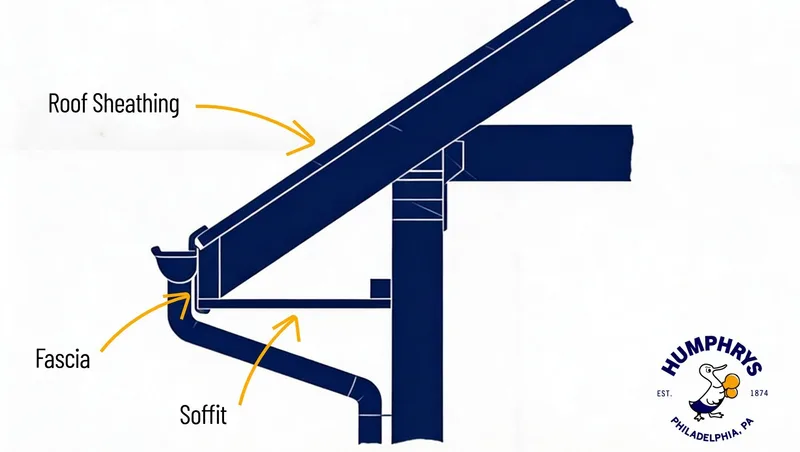
The most secure approach is to nail the tarp through the grommets into the wood roof sheathing, just above the gutter. Anchoring above the gutter line keeps loose nails from collecting in the gutter as the tear-off runs, which saves a cleanup step later.
Another option is to attach below the gutter, tying off to the fascia or soffit. This usually means weaving a rope through the grommets and securing it to a hook or anchor point in the fascia or soffit area.
Whichever method you use, anchor the tarp before the first shingle comes off. A tarp that shifts mid-job is worse than no tarp at all.
Step 3: Decide Your Debris Slide Path
How you drape the tarp depends on what you need it to do.
If you're using the tarp mainly to protect the house and siding, drape it straight down from the roofline at roughly a 90-degree drop. This creates a clean barrier along the wall that catches debris and keeps it off the structure.
If you're sliding debris to a specific destination, like a dumpster, a ground tarp, or a truck bed, drape it diagonally instead. A slope of roughly 45 to 60 degrees is ideal. It's steep enough to carry debris down to the drop point, but not so steep that material slides too fast and overshoots the end. Below 45 degrees, debris tends to stall and bunch up on the way down. The slick iron mesh handles the rest, letting shingles, nails, and debris travel cleanly to the bottom instead of scattering across the lawn.
Set your drop point before the tear-off begins. If the slide path runs into a dumpster or truck bed, secure the bottom edge through the grommets with a bungee so it stays put as debris loads up.

Step 4: Start Tearing Off Shingles
Once the tarp is anchored and the slide path is set, the tear-off runs the way it should. As shingles and felt come off, the material slides down the tarp toward the drop point instead of piling up on the roof or the ground. On bigger jobs, clear any buildup at the bottom periodically so the path stays open.
Step 5: Clear the Tarp and Wrap Up
When the tear-off is done, send the last of the debris down the slide path and into the drop point. Because the iron mesh doesn't hold onto debris the way a textured tarp does, a final sweep usually clears it. Then unhook the tie-off points, fold the tarp, and store it for the next job. Walk the property to confirm that landscaping, siding, and gutters are unscathed before you leave.
Common Mistakes to Avoid
Tarping a house for a shingle tear-off is straightforward once the setup is right, but a few common mistakes can turn a clean job into a messy one.
Undersizing the tarp. The most frequent mistake is reaching for a tarp that doesn't fully cover the slope below the work area. Gaps are where debris escapes, and a tarp that doesn't reach the drop point leaves a pile to clean up by hand. When you're between sizes, go with the larger one.
Rushing the anchor. A tarp that isn't secured along the roofline will shift the moment debris starts moving, and an unanchored edge catches wind fast. Both undo the point of tarping in the first place. Confirm every tie-off point is holding before the first shingle comes off.
Getting the slope wrong. Too shallow and debris stalls partway down. Too steep, and it slides too fast and overshoots the drop point. For a slide path to a dumpster or truck, a 45 to 60 degree angle keeps material moving at a controlled pace.
Skipping the final walk. The whole point of tarping a job is protecting the property, so confirm it worked. A quick walk around the house catches any stray debris in the landscaping, on the siding, or in the gutters before the crew packs up and leaves.
Why Roofers Choose Reusable Iron Mesh
Built from heavy-duty iron mesh, Humphrys shingle tear-off tarps hold up to the abrasion of repeated tear-offs and come back for the next job. It's a tarp made to be used, stored, and used again across a full season of work and beyond. Every Humphrys tarp is made in the USA, the same way the company has built textile products since 1874. If you're ready to add one to your setup, see our shingle tear-off tarps in standard sizes, with custom options available for larger or unusually shaped roofs.
Frequently Asked Questions
What is the best material for shingle tear-off tarps?
Iron mesh. It's the only material engineered for the demands of a tear-off, with a slick surface that lets shingles, nails, and tar-coated debris slide off cleanly, and the density to handle repeated jobs without thinning, tearing, or perforating.
Why should roofers use a shingle tear-off tarp?
To protect the customer's property and keep it unscathed. Replacing a roof creates a lot of falling debris, and a shingle tear-off tarp channels shingles, nails, and torn-off material away from the landscaping, siding, windows, and gutters instead of letting it scatter across the yard.
How do you attach a tear-off tarp?
There are two reliable methods. The most secure is to nail the tarp through its grommets into the roof deck, just above the gutter, which also keeps loose nails from collecting in the gutter during the tear-off. The other option is to attach below the gutter, weaving a rope through the grommets and anchoring to a hook in the fascia or soffit area.
Can you use this tarp for storm leaks in your roof?
No. A shingle tear-off tarp is a job-site tool for catching and sliding debris during a roof replacement, not a cover for an active roof leak. The iron mesh isn't waterproof, so it won't keep water out of a damaged roof. For storm and leak protection, you'll want a waterproof tarp. Our waterproof vs water-resistant guide breaks down which materials hold up to water and which don't.
Can you use this tarp to lift debris up and down?
No. A tear-off tarp is designed to slide debris down a draped slope to a drop point, not to be hoisted or lifted with debris loaded inside it. Lifting debris off a roof is a different job that calls for different equipment. For standard residential and light-commercial tear-offs, the tarp does its work by gravity, channeling material downwards.


