
Humphrys Textile Products has manufactured heavy duty tarps in the USA since 1874. From our facilities in Gosport, IN and Philadelphia, PA, we produce industrial-grade vinyl, polyethylene, and canvas tarps for contractors, trucking operations, agriculture, and commercial buyers nationwide. This guide takes you inside our tarp manufacturing process — from material selection and precision cutting to heat-sealed seams and grommet installation.
Step 1: Engineering Custom Tarp Designs
Every Humphrys tarp begins with a custom-engineered design. Our team works directly with each customer to determine exact specifications: size, load capacity, environmental conditions, and application requirements. No matter what you need, our tarps manufacturing process starts with strategic planning to ensure performance in the harshest conditions.
Step 2: Industrial-Grade Material Selection
Choosing the right fabric is critical in tarp manufacturing. Humphrys offers:
- Vinyl Tarps: Heavy-duty, fully waterproof, ideal for dump trucks and equipment
- Polyethylene Tarps: Lightweight, UV-resistant, cost-effective coverage
- Cotton Canvas & Canvak: Breathable, water-resistant, treated for durability
Are tarps waterproof? Yes, vinyl, poly, and fabrics treated with Canvak are engineered for water resistance and long-term exposure.
Not sure which material is right for your application? Our tarp buying guide breaks down thickness, weight, and use cases for each material.
Step 3: Precision Cutting for Consistency
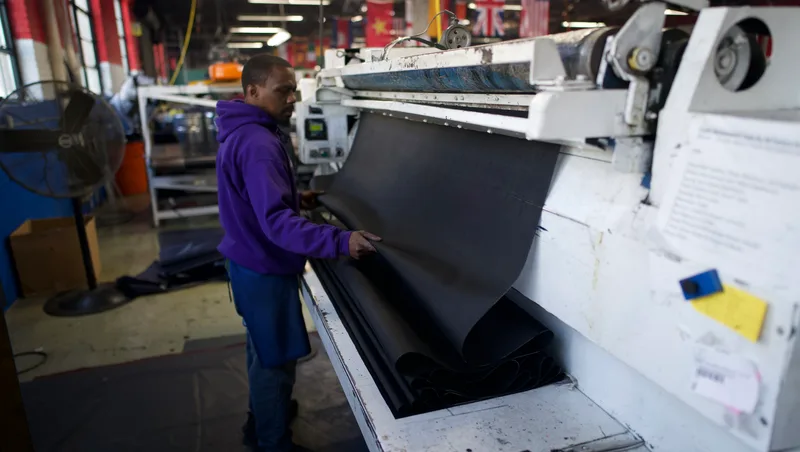
After finalizing the design and material, we start the cutting process. Cutting a tarp with high-precision, automated tools eliminates weak points and ensures every tarp meets exact specifications. Our cutting machines are adjusted to work with different materials, like thick vinyl or polyethylene, to create clean, accurate cuts. This careful cutting process improves seam integrity and maintains consistency for bulk orders.
Step 4: Heat-Sealed Seams for Maximum Strength
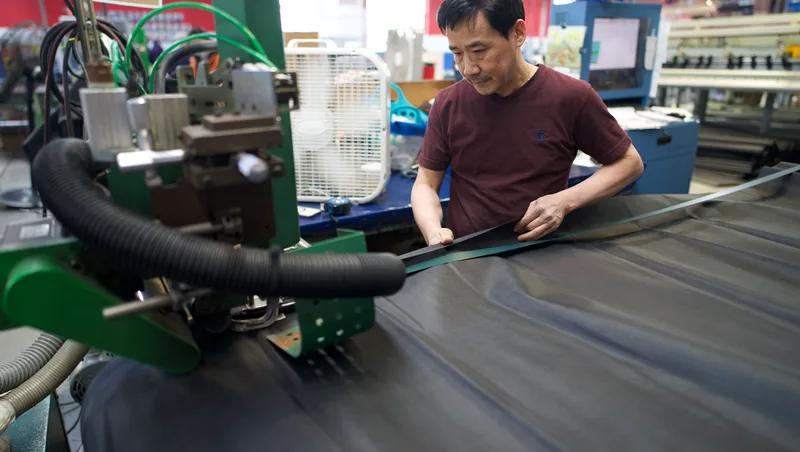
For products like heavy-duty vinyl tarps, we use heat-sealing techniques to bond panels together securely. By overlapping the seams and heat-sealing them, we create strong, uniform connections that won’t fail under tension from wind, rain, or snow. This makes Humphrys tarps a preferred choice among buyers needing long-haul reliability. Heat-sealing is also essential for our flame resistant tarp line, where maintaining a continuous waterproof barrier is critical in high-risk work environments.
Step 5: Reinforced Sewing & Stress Points
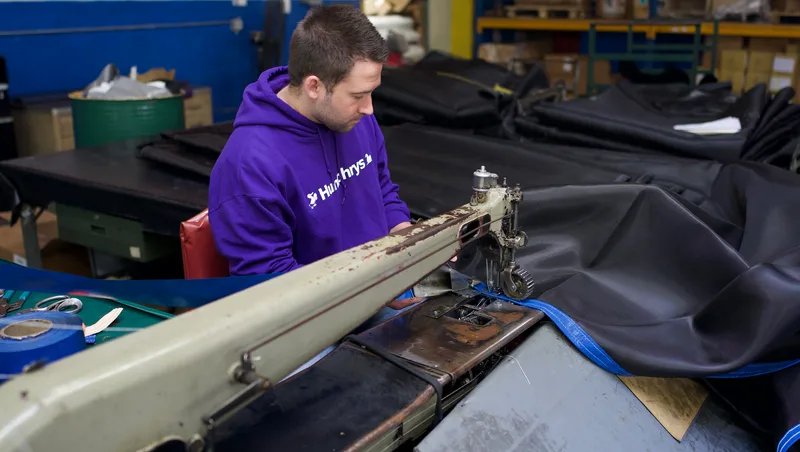
When flexibility matters, industrial-grade sewing reinforces hems, corners, and load-bearing areas. This hybrid approach answers the critical question: how to make a tarp that withstands real-world conditions. The answer lies in combining heat sealing, reinforced stitching, and strategic reinforcement at stress points. For materials like canvas and dump truck tarps, sewing is critical to maintain flexibility while ensuring the tarp stays intact under tension.
Step 6: Grommet Installation & Final Quality Assurance
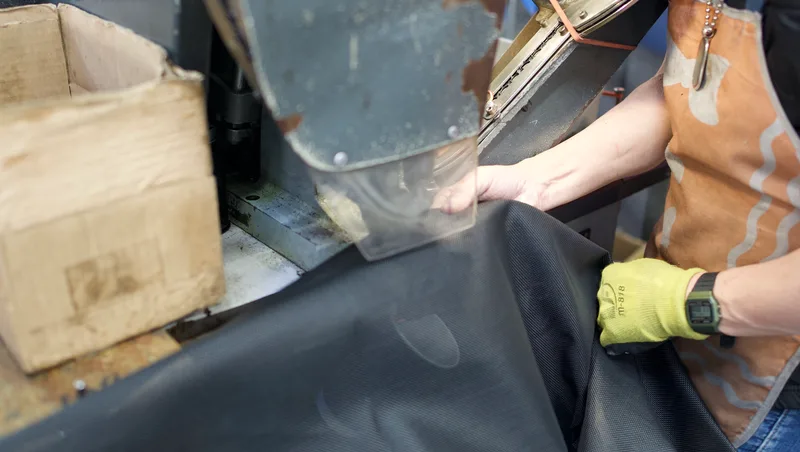
Industrial-grade grommets are installed at precise intervals for secure tie-downs along the edges. A perfect grommet placement is vital so the tarp can handle wind or tension without ripping, which is especially important for roofing tarps and dump truck tarps. Every tarp undergoes final inspection before shipping to meet strict Humphrys Textile Products quality standards, ensuring buyers receive American-made quality every time. For buyers in construction and roofing, our complete guide to construction tarps covers material selection, safety requirements, and application-specific recommendations.
Why Industrial Distributors Choose Humphrys
Since 1874, Humphrys Textile Products has been a trusted name in American tarp manufacturing. Here's why industrial distributors, contractors, and fleet operators choose us:
- American-Made Quality: Every tarp is manufactured at our facilities in Gosport, IN and Philadelphia, PA — with full quality control from raw material to finished product
- 150+ Years of Expertise: Founded in 1874, we bring generations of textile manufacturing knowledge to every product line
- Full Material Range: Heavy duty vinyl, polyethylene, canvas, and flame resistant tarps — all manufactured in-house
- Scalable Production: Flexible capacity for single orders through large-volume distributor programs
- Custom Fabrication: Made-to-order sizes, private label options, and specialized Canvak canvas treatment
American-Made Tarps: Why It Matters
When you buy from an overseas tarp supplier, you're relying on materials and construction you can't verify. Humphrys tarps are manufactured under one roof at our American facilities, where we control every step — from material sourcing to final inspection. That means consistent quality, faster lead times, and direct access to the team that built your tarp.
For government buyers, Humphrys tarps meet Buy American Act requirements for federal procurement. For contractors and fleet operators, buying American-made means faster replacement lead times and a manufacturer you can call directly when you need a custom solution.


